The translation editor allows a user to edit the translation of a page. Freely modify the paragraphs of the translations and still stay up to date with the original page. If the original page is edited and the translation is then retranslated, only the paragraphs that were changed will be overwritten; all of the changes made to the translation in other paragraphs will be preserved.
Locate editor
-
Navigate to the translation you want to edit.
-
Click the Translate page option below the title of the page.
-
Under Current translation, click the pen icon to open the translation editor.
Locate editor | Image

The editor opens with two tabs: Text and Attachments.
Modify translations
The Text tab contains a list of all translated text fragments, shown in the order they appear on the page. Each fragment shows the original wording under Source next to its Translation. The search bar located at the top of the list makes it easy to find specific text fragments - it matches both the source and the translation. To edit a fragment, click the pen symbol on the right.
Edit paragraph | Image
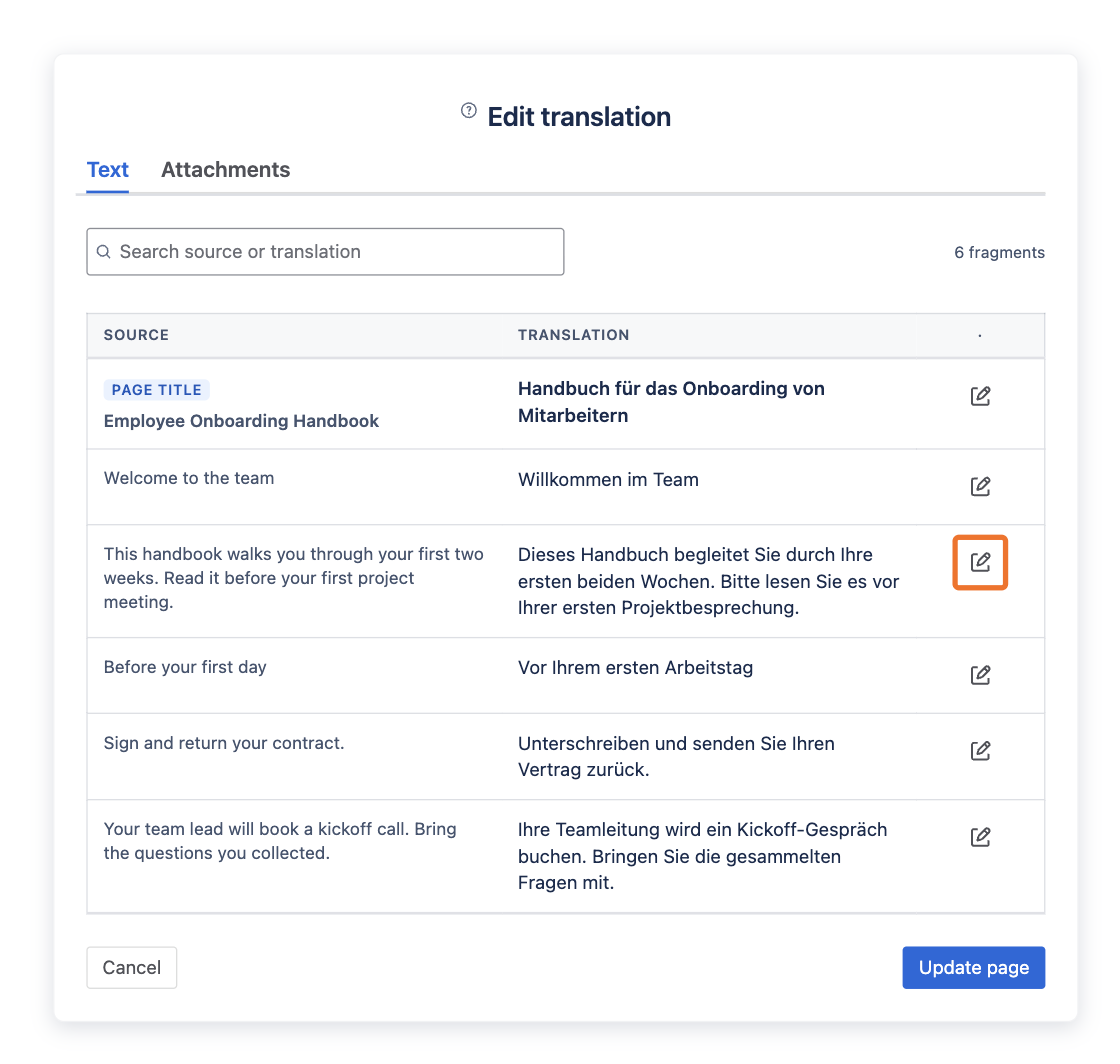
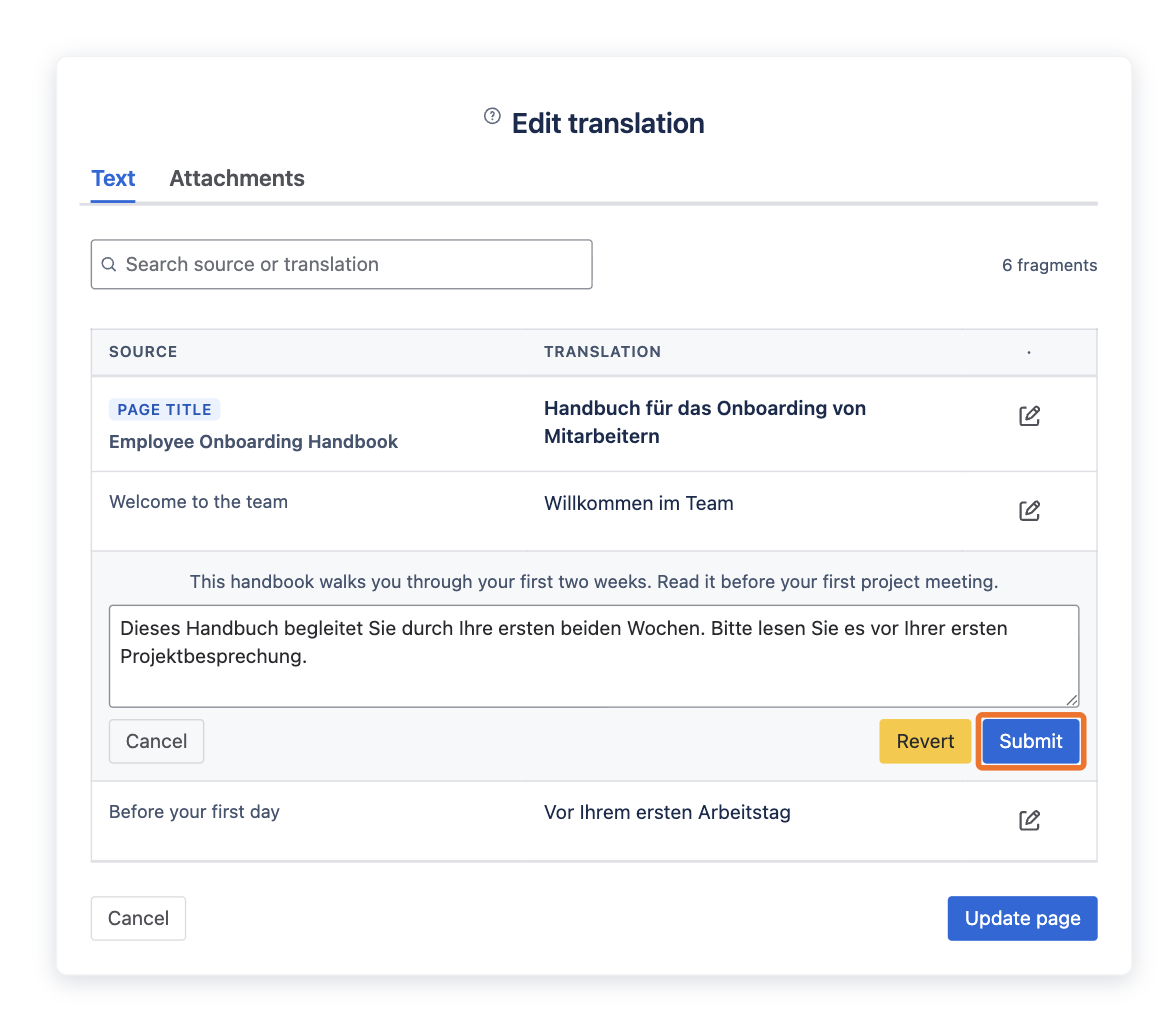
When clicking the pen symbol, a text field will open where the text can be modified, with the original text shown above it for reference. Normally, the text is straightforward to edit. However, if special characters or formatting are included in the text or are to be inserted, certain rules must be followed. Some special characters need to be changed as described in Invalid Characters. Text can be formatted with HTML tags as described in Formatting Tags. To apply the changes, click the Submit button. When using invalid special characters or formatting, an error will be shown.
Submit edited paragraph | Image
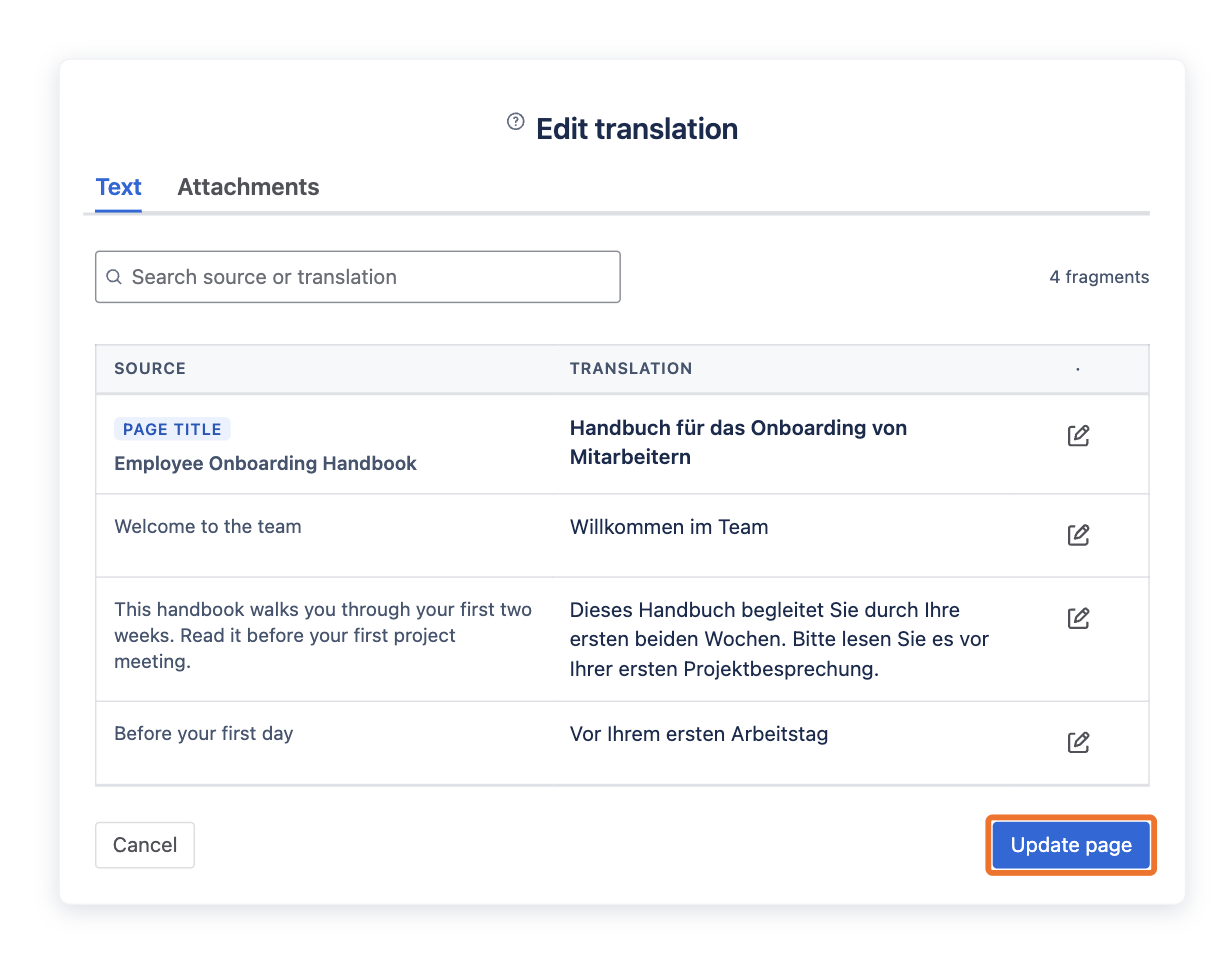
Finally, apply all modifications by clicking the Update page button. If no modifications should be saved, use the Cancel button.
Update page | Image
Reverting translations
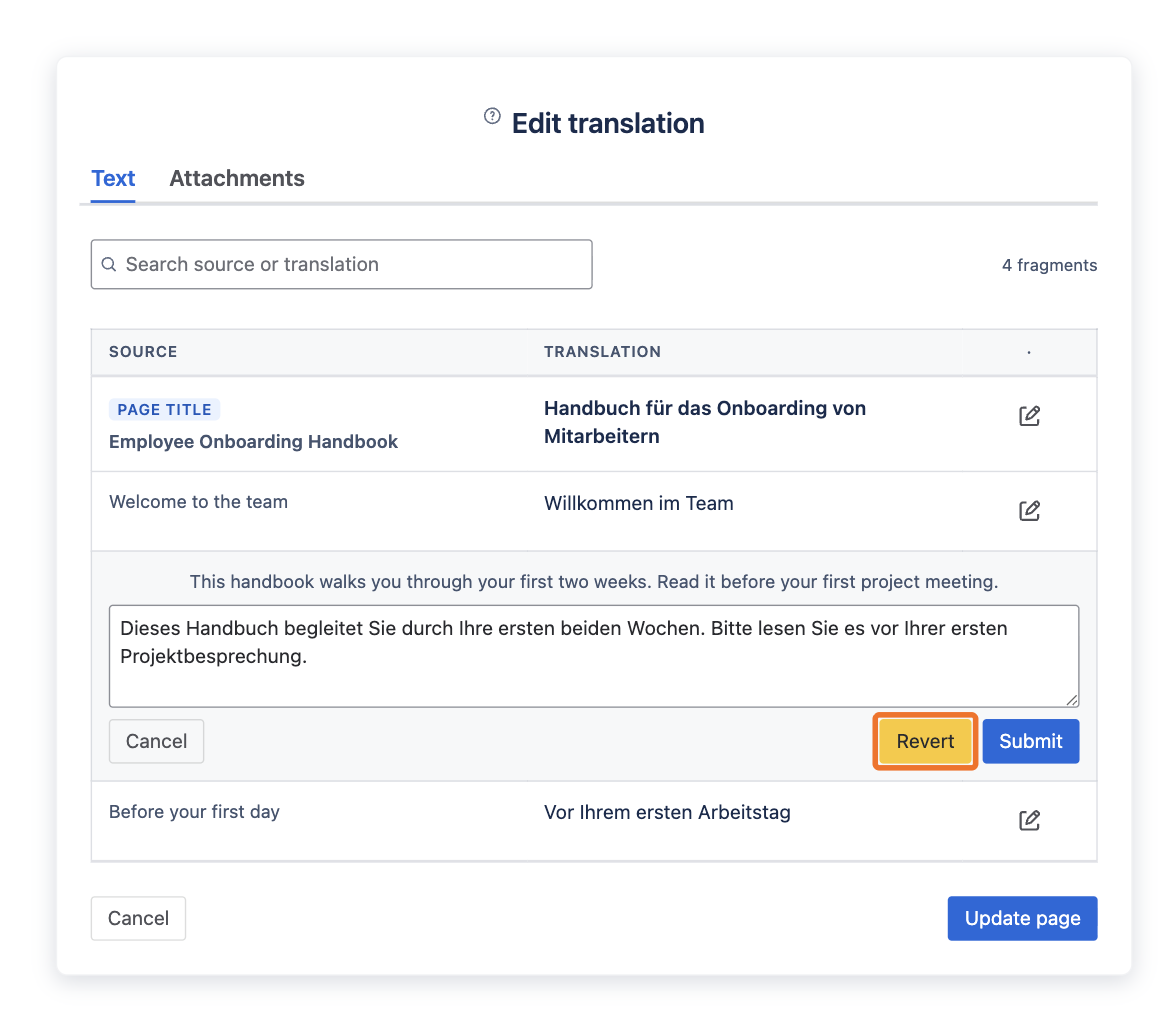
The user can revert changes made to a paragraph by clicking Revert. This will reset the text fragment to the initial translation created by Easy Translator for Confluence. All changes made by any user to a given text fragment will be reset. After using the Revert button, the Submit button has to be clicked in order to apply the changes.
Revert translation | Image
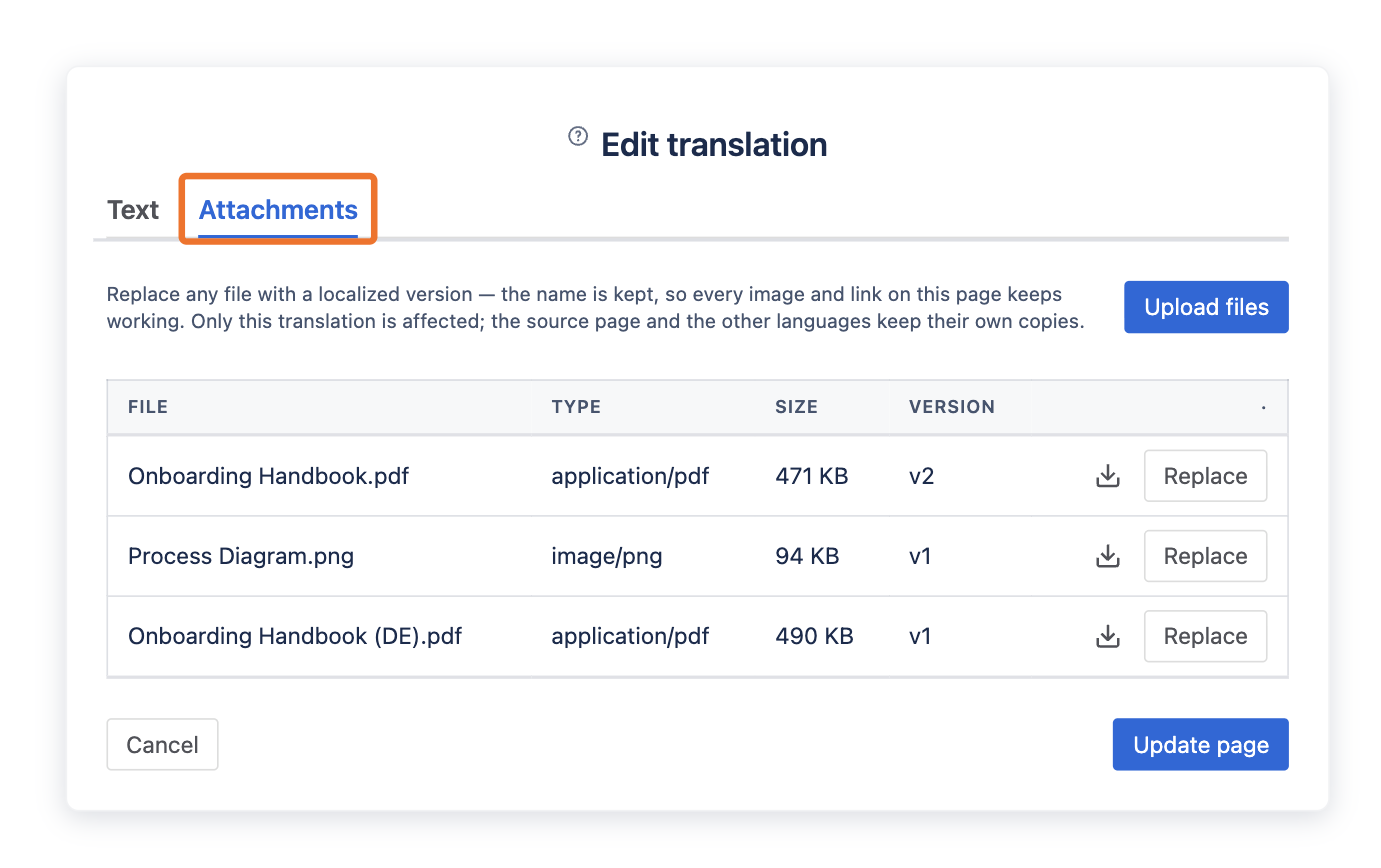
Attachments
Files on a translated page - screenshots, diagrams and PDFs - cannot be machine translated. The Attachments tab lets you replace them with localised versions without breaking the images and links that point at them.
Attachments tab | Image
The tab behaves differently depending on how the page is translated.
On separate translated pages, each language has its own page and its own files. Use Upload files to add a file, or Replace on a row to upload a new version of an existing one. The filename is kept, so every image and link on the page keeps working. Uploading a file whose name already exists asks you to confirm, then adds a new version. Only this translation is affected - the source page and the other languages keep their own copies.
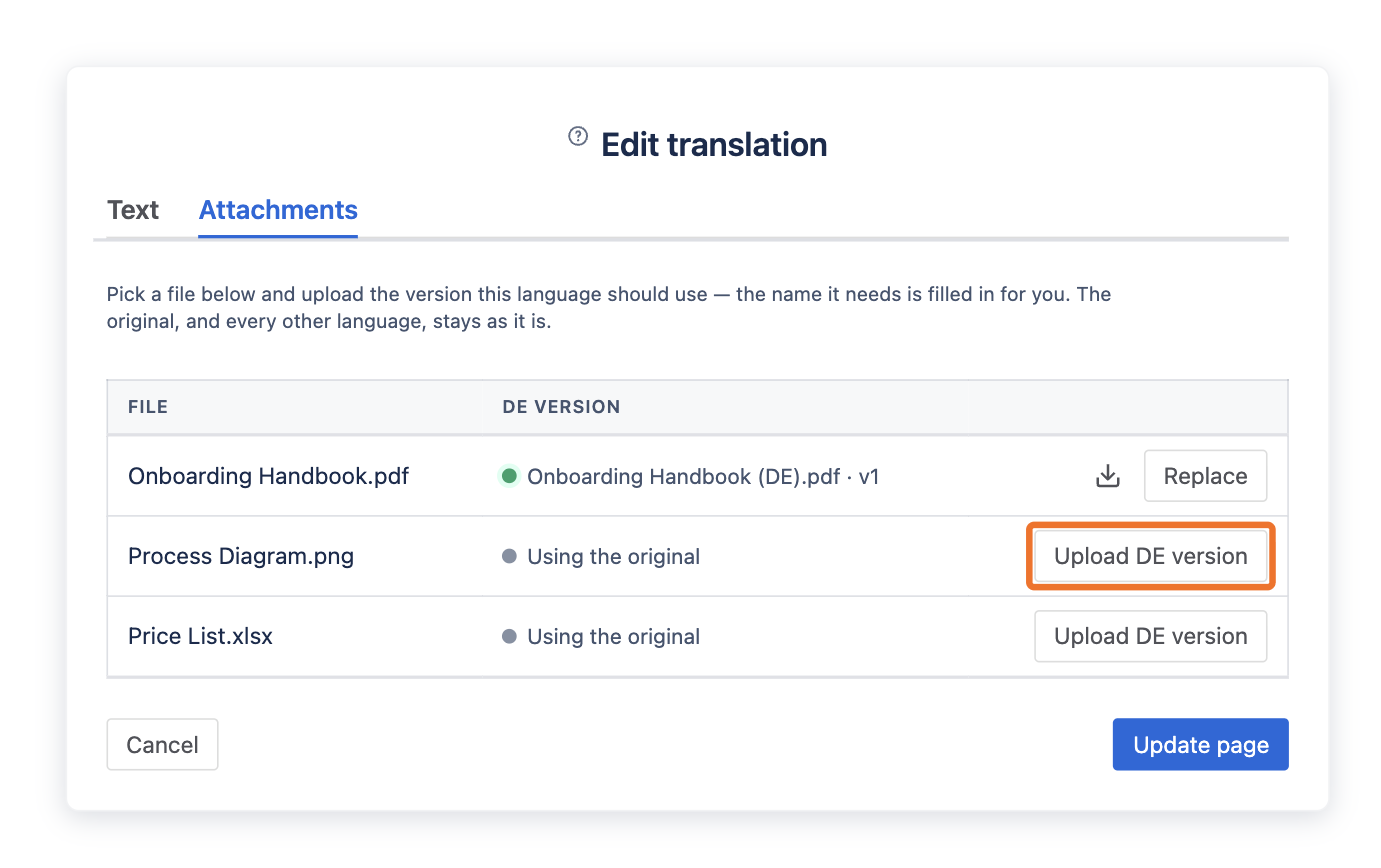
On single page translations, all languages share one page, so files are assigned to a language by name. The table shows one row per original file and a column for the language you are editing.
-
Using the original means this language has no version of its own yet, and readers see the original file.
-
Upload (DE) version uploads a file for this language. The required name is filled in for you: report.pdf becomes report (DE).pdf .
Every language keeps showing the original until a version is uploaded for it, so nothing has to be prepared up front.
Per-language attachments | Image
A replacement file must have the same file extension as the file it replaces.